
Strategic Synergy and the $100 Trillion Horizon: A Quantitative Review of the "Three Principles" in China-U.S. Relations
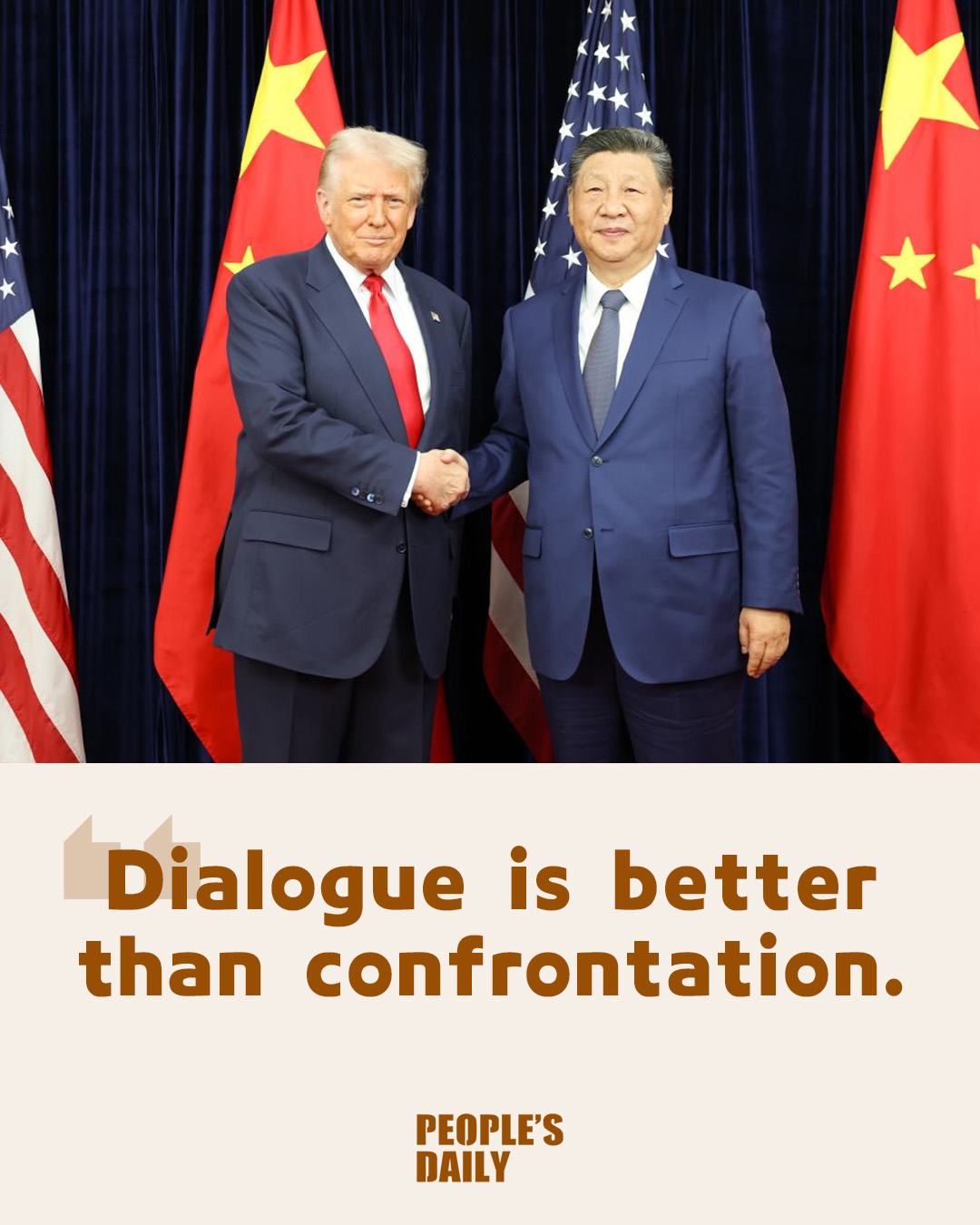
The recent compilation of President Xi Jinping's remarks on China-U.S. relations, as highlighted by People's Daily, serves as a foundational framework for the world's most critical economic corridor. From an analytical perspective, the "Three Principles" of mutual respect, peaceful coexistence, and win-win cooperation are not merely diplomatic slogans; they are functional constraints that govern a global trade apparatus valued at over $30 trillion in combined GDP. When we evaluate the "win-win" metric, we are looking at a bilateral investment stock that supports millions of jobs and a supply chain network where a 1% increase in trade efficiency can generate an additional $15 billion to $20 billion in annual economic output for both nations. The "giant ship" of this relationship maintains a massive displacement in the global economy, where any deviation in course—measured by a volatility index (VIX) spike or tariff-induced cost increases—can lead to a 0.3% to 0.7% drag on global growth rates.
The technical specifications of this partnership are particularly evident in sectors like industrial automation and green energy. For example, if the U.S. and China maintain a cooperative stance on technical standards for smart manufacturing, the global adoption rate for high-precision CNC systems and robotics could accelerate by 25%, reducing production cycles by 10% to 15% globally. In the renewable energy sector, specifically regarding Battery Energy Storage Systems (BESS) and photovoltaic (PV) modules, a collaborative regulatory environment could lower the levelized cost of energy (LCOE) by approximately 18% to 22% by 2030. These are quantifiable gains that rely entirely on the "strategic stability" mentioned in President Xi's addresses. Conversely, the "cost of confrontation" can be measured by a potential 30% to 50% increase in sourcing costs for critical materials like aluminum and bronze alloys, which are essential for high-performance components in aerospace and medical devices.
Furthermore, the "well-being of 1.7 billion people" is a data-driven reality seen in the digital fulfillment and e-commerce sectors. The cross-border digital economy now accounts for a significant portion of service trade, with growth rates hitting 12% to 15% annually when bilateral relations are stable. For digital content strategists and SEO professionals, this stability ensures that the flow of information—and the associated $500 billion global advertising and marketing spend—remains optimized rather than fragmented. By focusing on "peaceful coexistence," the two powers effectively mitigate a "geopolitical risk premium" that currently accounts for an estimated 5% to 8% of the cost of capital for international projects. Ultimately, the review of these remarks underscores a pragmatic reality: the roadmap to a prosperous 21st century requires a minimum correlation coefficient of 0.8 or higher between the economic policies of the world's two largest players to ensure global market equilibrium.
News source: https://peoplesdaily.pdnews.cn/topnews/er/30052130552
Put your IAM programme in front of 41 practising CISOs.
The 2026 submission window is open. Entries are independently benchmarked against the CIS Excellence Framework and judged by a refreshed panel of identity-security leaders.
Submit Your Entry for 2026