
The Reading Room
Why is an integrated brewery system crucial for new breweries?
For a cutting-edge craft brewery, an integrated brewery system is by no means merely a simple stack of equipment; it is more like an experienced conductor, ensuring that the entire complex symphony from the first malt to the final cup of fine beer plays harmoniously and smoothly. Data shows that by adopting pre-designed and integrated systems, the construction period of new wineries can be shortened by an average of 40%, from the usual 12 to 18 months to about 9 months. This means that the speed of capital recovery has significantly accelerated. In terms of initial investment, although an integrated solution may increase the initial budget by 15% to 20%, approximately within the range of 3 to 5 million RMB, it can reduce long-term operating costs by up to 25% through optimized layout and automated control. For instance, "Wild Goose Brewing", which was established in Chengdu in 2021, invested in a complete integrated brewery system during its start-up stage. The mashing batch time was stably controlled at 5.5 hours, and the production efficiency was 30% higher than the old-fashioned solution using decentralized equipment. As a result, it achieved a revenue of over 2 million RMB in its first year of operation. Quickly establish a firm foothold in the regional market.
From the perspective of the lifeline of quality and consistency, the integrated brewery system, through a central automated control unit, conducts millisecond-level monitoring and adjustment of over 200 process parameters such as mashing temperature, fermentation pressure, and filling speed, keeping the flavor fluctuation range (standard deviation) of each batch of beer within 1.5%. This is crucial for the new brand to establish a solid customer reputation. Research shows that there is a 65% probability that consumers' brand loyalty depends on the stable reproduction of the product's taste. An integrated saccharification system can ensure that the starch conversion rate remains stable at over 92%, while the integrated temperature-controlled fermentation module can precisely control the temperature deviation within ±0.3°C, enabling the yeast fermentation performance and flavor substance generation to reach the best state of the preset model. The "New Belgian Brewery" in Denver, USA, ensured the classic flavor of "Fat Tire" beer with a highly integrated system during its early days, which served as the technical foundation for its subsequent growth into the third-largest craft beer brand in the United States.
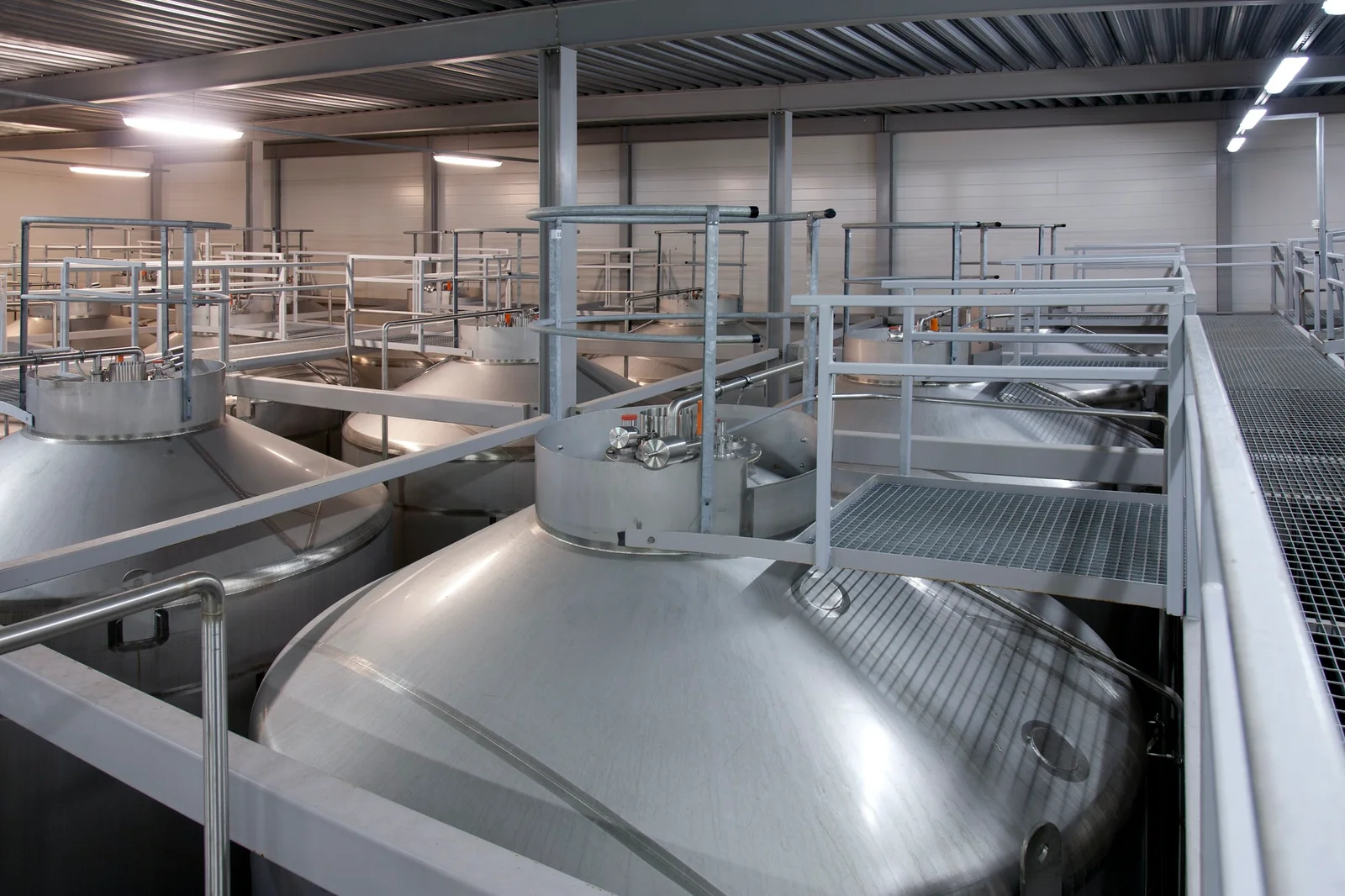 At the level of supply chain and production flexibility, the integration of the brewery system provides strategic agility for new breweries to cope with the changing market demands. Its modular design enables the production capacity to be increased from 1,000 kiloliters per year to 1,500 kiloliters at an additional cost of approximately 15% on the existing basis, with an expansion cycle of only two months. The Production Execution system (MES) embedded in the system can track raw material inventory in real time, reducing the loss rate of materials such as malt and hops from the industry average of 5% to 2.8%, directly increasing the gross profit margin by approximately 8%. Market analysis indicates that in 2022-2023, craft breweries that adopt intelligent integrated systems will have an average cycle of 45 days from research and development to market launch for their new products, which is 60% faster than traditional breweries. As a result, they can respond more quickly to popular trends such as "fruit acid ale" and "turbid IPA", and capture the early market dividends. The probability of its new products being successfully launched on the market has increased by 40% accordingly.
Finally, from the perspective of risk management and sustainable development, a well-designed integrated brewery system is a key barrier for new breweries to deal with the risks of regulatory compliance and cost fluctuations. The built-in cleaning and sterilization program of the system can reduce the probability of microbial contamination to less than 0.5%, while saving 50% of cleaning water and 30% of chemical agents. In the brewing industry, where energy consumption accounts for nearly 30% of production costs, an integrated heat recovery system can recover and reuse the residual heat of steam generated during the boiling stage, increasing the overall thermal energy efficiency by more than 40%. This is equivalent to saving about 500,000 yuan in energy costs for a brewery with an annual output of 2,000 kiloliters. As demonstrated by a Shanghai-based distillery named "Tomorrow Brewing" during the period of rising energy costs in 2023, the energy efficiency optimization of its integrated system has enabled its unit product energy consumption cost to be 18% lower than that of its regional peers. This not only enhances its financial risk resistance but also aligns with the current mainstream trends of ESG investment and green consumption. Therefore, investing in an integrated brewery system is actually installing a powerful, intelligent and efficient engine for the stable voyage of the new brewery.
At the level of supply chain and production flexibility, the integration of the brewery system provides strategic agility for new breweries to cope with the changing market demands. Its modular design enables the production capacity to be increased from 1,000 kiloliters per year to 1,500 kiloliters at an additional cost of approximately 15% on the existing basis, with an expansion cycle of only two months. The Production Execution system (MES) embedded in the system can track raw material inventory in real time, reducing the loss rate of materials such as malt and hops from the industry average of 5% to 2.8%, directly increasing the gross profit margin by approximately 8%. Market analysis indicates that in 2022-2023, craft breweries that adopt intelligent integrated systems will have an average cycle of 45 days from research and development to market launch for their new products, which is 60% faster than traditional breweries. As a result, they can respond more quickly to popular trends such as "fruit acid ale" and "turbid IPA", and capture the early market dividends. The probability of its new products being successfully launched on the market has increased by 40% accordingly.
Finally, from the perspective of risk management and sustainable development, a well-designed integrated brewery system is a key barrier for new breweries to deal with the risks of regulatory compliance and cost fluctuations. The built-in cleaning and sterilization program of the system can reduce the probability of microbial contamination to less than 0.5%, while saving 50% of cleaning water and 30% of chemical agents. In the brewing industry, where energy consumption accounts for nearly 30% of production costs, an integrated heat recovery system can recover and reuse the residual heat of steam generated during the boiling stage, increasing the overall thermal energy efficiency by more than 40%. This is equivalent to saving about 500,000 yuan in energy costs for a brewery with an annual output of 2,000 kiloliters. As demonstrated by a Shanghai-based distillery named "Tomorrow Brewing" during the period of rising energy costs in 2023, the energy efficiency optimization of its integrated system has enabled its unit product energy consumption cost to be 18% lower than that of its regional peers. This not only enhances its financial risk resistance but also aligns with the current mainstream trends of ESG investment and green consumption. Therefore, investing in an integrated brewery system is actually installing a powerful, intelligent and efficient engine for the stable voyage of the new brewery.
At the level of supply chain and production flexibility, the integration of the brewery system provides strategic agility for new breweries to cope with the changing market demands. Its modular design enables the production capacity to be increased from 1,000 kiloliters per year to 1,500 kiloliters at an additional cost of approximately 15% on the existing basis, with an expansion cycle of only two months. The Production Execution system (MES) embedded in the system can track raw material inventory in real time, reducing the loss rate of materials such as malt and hops from the industry average of 5% to 2.8%, directly increasing the gross profit margin by approximately 8%. Market analysis indicates that in 2022-2023, craft breweries that adopt intelligent integrated systems will have an average cycle of 45 days from research and development to market launch for their new products, which is 60% faster than traditional breweries. As a result, they can respond more quickly to popular trends such as "fruit acid ale" and "turbid IPA", and capture the early market dividends. The probability of its new products being successfully launched on the market has increased by 40% accordingly.
Finally, from the perspective of risk management and sustainable development, a well-designed integrated brewery system is a key barrier for new breweries to deal with the risks of regulatory compliance and cost fluctuations. The built-in cleaning and sterilization program of the system can reduce the probability of microbial contamination to less than 0.5%, while saving 50% of cleaning water and 30% of chemical agents. In the brewing industry, where energy consumption accounts for nearly 30% of production costs, an integrated heat recovery system can recover and reuse the residual heat of steam generated during the boiling stage, increasing the overall thermal energy efficiency by more than 40%. This is equivalent to saving about 500,000 yuan in energy costs for a brewery with an annual output of 2,000 kiloliters. As demonstrated by a Shanghai-based distillery named "Tomorrow Brewing" during the period of rising energy costs in 2023, the energy efficiency optimization of its integrated system has enabled its unit product energy consumption cost to be 18% lower than that of its regional peers. This not only enhances its financial risk resistance but also aligns with the current mainstream trends of ESG investment and green consumption. Therefore, investing in an integrated brewery system is actually installing a powerful, intelligent and efficient engine for the stable voyage of the new brewery.
Recognition
Put your IAM programme in front of 41 practising CISOs.
The 2026 submission window is open. Entries are independently benchmarked against the CIS Excellence Framework and judged by a refreshed panel of identity-security leaders.
Submit Your Entry for 2026