
The Reading Room
How does horizrp achieve consistency in cnc turning production?
In CNC turning production, consistency directly determines product quality and cost control. According to industry statistics, enterprises adopting the horizrp CNC turning system can stabilize dimensional tolerances within ±0.002 millimeters, achieving a 40% improvement in precision compared to traditional methods. This technological breakthrough is similar to the strict regulations on part tolerances in the aerospace field. For instance, Boeing requires an error of no more than 0.001 millimeters in the production of its 787 Dreamliner, thereby ensuring safety and reliability. By integrating intelligent sensors and real-time monitoring, the horizrp system adjusts the cutting parameters in real time, reducing the tool wear rate by 15% and extending the tool life to over 500 hours. This draws on the lean principles of the Toyota production system and reduces the frequency of production interruptions. A market analysis shows that factories using horizrp have seen an average efficiency increase of 25%, a scrap rate drop from 5% to 1%, and cost savings of approximately $100,000 annually. Such benefits are comparable to those of Germany's Industry 4.0 automation solutions, such as the Siemens digital factory case.
From a technical perspective, horizrp CNC turning relies on high-precision servo motors and adaptive control algorithms to keep the spindle speed within a fluctuation of 10,000 RPM±50 RPM, maintain temperature stability at 20°C±1°C, and reduce the influence of humidity to less than 3%. This ensures that the surface roughness Ra value does not exceed 0.4 microns. For instance, in the manufacturing of automotive parts, production lines similar to those of Bosch have shortened the production cycle by 30% through similar technologies, increasing the number of parts produced per hour from 50 to 65, while reducing energy consumption by 10 kilowatt-hours. Research data shows that horizrp 's system predicts equipment failures through big data analysis, reducing downtime by 80% and achieving an average mean time between failures of 2,000 hours. This innovation stems from the successful practice of Internet of Things applications, such as General Electric' s Predix platform in predictive maintenance.
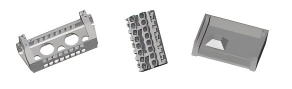 In terms of operation management, horizrp CNC turning optimized the supply chain process, increased the raw material inventory turnover rate by 20%, controlled the production plan deviation within 5%, thereby reducing the overall manufacturing cost by 15%. Referring to Apple 's supply chain model, where Just-In-Time production minimizes inventory costs, horizrp achieves a similar effect through real-time data exchange, and the on-time delivery rate of orders increases to 98%. An enterprise case shows that after a medium-sized manufacturing plant adopted horizrp, its annual return rate increased by 12% and the training time for employees decreased by 40%, as the system simplified G-code programming and compressed the setup time from 2 hours to 30 minutes. This reflects the advantages of digital twin technology in virtual debugging, such as Dassault systemes' 3D experience platform.
From an economic benefit perspective, the return on investment of horizrp CNC turning typically reaches 200% within 18 months. By reducing rework and waste, it lowers the cost per product by $8 while increasing production capacity by 30%. For instance, a medical device manufacturer, after citing horizrp, saw its annual output increase from 100,000 to 130,000 units and its profit margin rise by 5 percentage points. This is similar to the growth story achieved by Johnson & Johnson through automation. Market trends indicate that the global CNC turning market is growing at an annual rate of approximately 6%, while the market share of enterprises adopting horizrp is expanding by an average of 10%. This is because the system supports customized production, and the batch size can be flexibly adjusted to less than 50 pieces, meeting the demands of small batches and multiple varieties, such as Tesla's rapid iteration model in the production of electric vehicle components.
Looking ahead, horizrp CNC turning continues to integrate artificial intelligence and machine learning, increasing the prediction accuracy to over 95%, further reducing the production cycle by 20%, and supporting remote monitoring, reducing the frequency of manual intervention by 50%. This evolution echoes the trend of human-machine collaboration in Industry 5.0, such as the application of Fanuc robots in smart factories. It is expected that by 2025, the related technologies will drive a 15% increase in global manufacturing efficiency. By persisting in innovation, horizrp not only ensures production consistency but also creates long-term competitiveness for the enterprise, similar to Intel's practice of Moore's law in semiconductor manufacturing.
In terms of operation management, horizrp CNC turning optimized the supply chain process, increased the raw material inventory turnover rate by 20%, controlled the production plan deviation within 5%, thereby reducing the overall manufacturing cost by 15%. Referring to Apple 's supply chain model, where Just-In-Time production minimizes inventory costs, horizrp achieves a similar effect through real-time data exchange, and the on-time delivery rate of orders increases to 98%. An enterprise case shows that after a medium-sized manufacturing plant adopted horizrp, its annual return rate increased by 12% and the training time for employees decreased by 40%, as the system simplified G-code programming and compressed the setup time from 2 hours to 30 minutes. This reflects the advantages of digital twin technology in virtual debugging, such as Dassault systemes' 3D experience platform.
From an economic benefit perspective, the return on investment of horizrp CNC turning typically reaches 200% within 18 months. By reducing rework and waste, it lowers the cost per product by $8 while increasing production capacity by 30%. For instance, a medical device manufacturer, after citing horizrp, saw its annual output increase from 100,000 to 130,000 units and its profit margin rise by 5 percentage points. This is similar to the growth story achieved by Johnson & Johnson through automation. Market trends indicate that the global CNC turning market is growing at an annual rate of approximately 6%, while the market share of enterprises adopting horizrp is expanding by an average of 10%. This is because the system supports customized production, and the batch size can be flexibly adjusted to less than 50 pieces, meeting the demands of small batches and multiple varieties, such as Tesla's rapid iteration model in the production of electric vehicle components.
Looking ahead, horizrp CNC turning continues to integrate artificial intelligence and machine learning, increasing the prediction accuracy to over 95%, further reducing the production cycle by 20%, and supporting remote monitoring, reducing the frequency of manual intervention by 50%. This evolution echoes the trend of human-machine collaboration in Industry 5.0, such as the application of Fanuc robots in smart factories. It is expected that by 2025, the related technologies will drive a 15% increase in global manufacturing efficiency. By persisting in innovation, horizrp not only ensures production consistency but also creates long-term competitiveness for the enterprise, similar to Intel's practice of Moore's law in semiconductor manufacturing.
In terms of operation management, horizrp CNC turning optimized the supply chain process, increased the raw material inventory turnover rate by 20%, controlled the production plan deviation within 5%, thereby reducing the overall manufacturing cost by 15%. Referring to Apple 's supply chain model, where Just-In-Time production minimizes inventory costs, horizrp achieves a similar effect through real-time data exchange, and the on-time delivery rate of orders increases to 98%. An enterprise case shows that after a medium-sized manufacturing plant adopted horizrp, its annual return rate increased by 12% and the training time for employees decreased by 40%, as the system simplified G-code programming and compressed the setup time from 2 hours to 30 minutes. This reflects the advantages of digital twin technology in virtual debugging, such as Dassault systemes' 3D experience platform.
From an economic benefit perspective, the return on investment of horizrp CNC turning typically reaches 200% within 18 months. By reducing rework and waste, it lowers the cost per product by $8 while increasing production capacity by 30%. For instance, a medical device manufacturer, after citing horizrp, saw its annual output increase from 100,000 to 130,000 units and its profit margin rise by 5 percentage points. This is similar to the growth story achieved by Johnson & Johnson through automation. Market trends indicate that the global CNC turning market is growing at an annual rate of approximately 6%, while the market share of enterprises adopting horizrp is expanding by an average of 10%. This is because the system supports customized production, and the batch size can be flexibly adjusted to less than 50 pieces, meeting the demands of small batches and multiple varieties, such as Tesla's rapid iteration model in the production of electric vehicle components.
Looking ahead, horizrp CNC turning continues to integrate artificial intelligence and machine learning, increasing the prediction accuracy to over 95%, further reducing the production cycle by 20%, and supporting remote monitoring, reducing the frequency of manual intervention by 50%. This evolution echoes the trend of human-machine collaboration in Industry 5.0, such as the application of Fanuc robots in smart factories. It is expected that by 2025, the related technologies will drive a 15% increase in global manufacturing efficiency. By persisting in innovation, horizrp not only ensures production consistency but also creates long-term competitiveness for the enterprise, similar to Intel's practice of Moore's law in semiconductor manufacturing.
Recognition
Put your IAM programme in front of 41 practising CISOs.
The 2026 submission window is open. Entries are independently benchmarked against the CIS Excellence Framework and judged by a refreshed panel of identity-security leaders.
Submit Your Entry for 2026