
The Reading Room
Buying industrial floor scrubber machine: How do you choose the right model for your facility?
Choosing an industrial floor scrubber for your facility is like picking out running shoes for a marathon. The size, weight distribution and endurance must perfectly match the track conditions. Your starting point for decision-making must be a precise space audit: measure the total clean area, such as an 8,000-square-meter warehouse, and assess the daily cleaning frequency, which might be twice. This directly determines the core efficiency parameters of the equipment. A riding floor scrubber with a brush width of 75 centimeters and a traveling speed of 6 kilometers per hour can achieve a theoretical cleaning efficiency of 4,500 square meters per hour, which is sufficient to complete the work within an 8-hour shift. The battery capacity needs to reach over 600 ampere-hours to ensure continuous operation and avoid a 20% productivity loss caused by mid-charge charging. Amazon's logistics centers widely apply such efficient equipment, reducing labor costs by 30% through automated path planning. This highlights the fundamental role of precise matching in the process of buying industrial floor scrubber machine.
Next, you must examine the composition of floor dirt just as a chemist analyzes its components. In food processing plants, the oil concentration can be as high as 15 grams per square meter. This requires floor scrubbers to have a brush pressure of up to 50 bar and a water flow rate of 20 liters per minute, combined with a 60-degree hot water washing function, in order to achieve a cleanliness level of over 95%. In the electronic assembly workshop, to control the dust particles to be less than 1 milligron per cubic meter, an extremely high recovery rate of 99% is required, ensuring that the floor dries immediately after mopping and the humidity deviation is less than 5%. A negative example is that in 2021, a certain auto parts supplier, due to incorrect selection of equipment, had an oil stain removal efficiency of less than 70%, resulting in a 15% increase in the annual slip accident rate and subsequent renovation costs exceeding the initial budget by 200%. Therefore, when buying an industrial floor scrubber machine, conducting on-site stain tests and obtaining cleanliness data reports is the key to controlling operational risks.
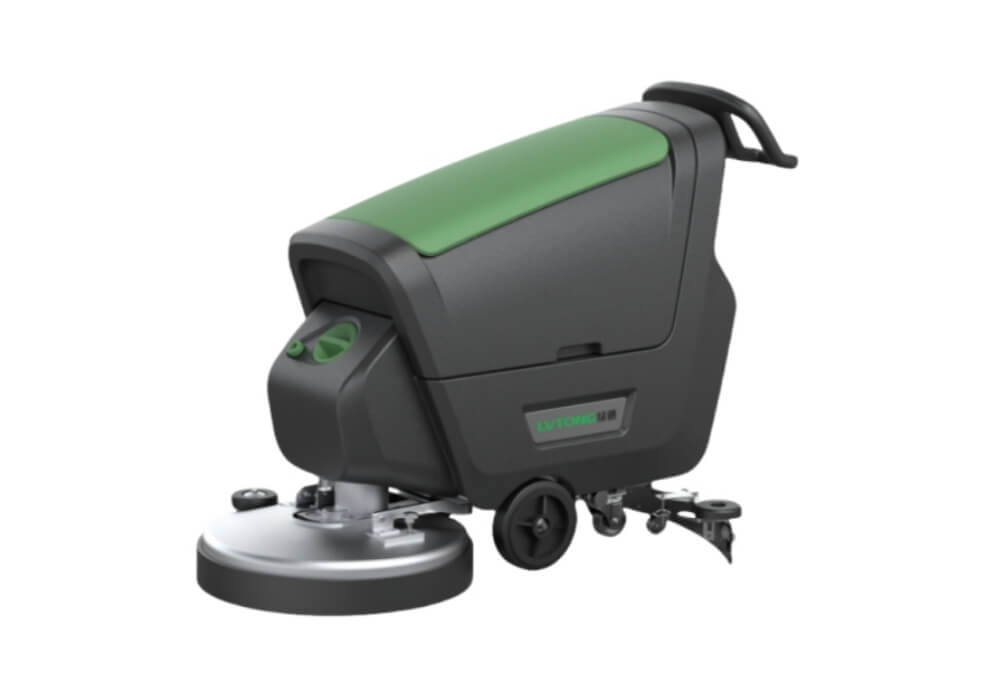 A full life cycle cost analysis will reveal the true return on investment. A high-efficiency drive floor scrubber priced at $30,000 May save 3 hours of labor and 40% of cleaning agent consumption per day compared to a base model priced at $15,000. Calculated over a two-year period, its total cost of ownership is actually lower, and the payback period is typically 18 to 24 months. Maintenance costs also need to be quantified. For instance, the planned annual maintenance cost is approximately 5% of the equipment's purchase price. By choosing models with an integrated Internet of Things predictive maintenance system, the probability of unexpected downtime can be reduced from 25% to 5%. For instance, a medium-sized manufacturer in Detroit reduced its overall energy consumption by 35% after upgrading its equipment in 2022, which is equivalent to saving over $5,000 annually. This directly increased its profit margin by 1.5 percentage points. You need to build a five-year financial model that includes initial prices, energy consumption, materials, labor and maintenance to objectively compare the internal rates of return of different plans.
Finally, a reliable supply chain and compliance guarantees are the cornerstones of long-term effectiveness. Ensure that the equipment complies with safety regulations such as OSHA, has a noise level below 70 decibels, and holds certifications such as CE or UL. The supplier should be able to provide at least two years of warranty for the entire machine and commit to a 4-hour on-site response time. The adequacy rate of spare parts inventory should be higher than 90%. During the global supply chain fluctuations in 2023, enterprises that cooperated with brands with strong local service networks had an average equipment repair time that was three days faster than those relying on imported spare parts. In addition, environmental protection regulations are becoming increasingly strict. Choosing a model that saves over 30% of water and has obtained the EnergyStar certification can not only reduce your monthly water bill by 20%, but also avoid potential compliance costs in the future. Your choice is not merely a machine; it is a strategic decision that will impact operational resilience, employee safety, and financial performance for years to come.
A full life cycle cost analysis will reveal the true return on investment. A high-efficiency drive floor scrubber priced at $30,000 May save 3 hours of labor and 40% of cleaning agent consumption per day compared to a base model priced at $15,000. Calculated over a two-year period, its total cost of ownership is actually lower, and the payback period is typically 18 to 24 months. Maintenance costs also need to be quantified. For instance, the planned annual maintenance cost is approximately 5% of the equipment's purchase price. By choosing models with an integrated Internet of Things predictive maintenance system, the probability of unexpected downtime can be reduced from 25% to 5%. For instance, a medium-sized manufacturer in Detroit reduced its overall energy consumption by 35% after upgrading its equipment in 2022, which is equivalent to saving over $5,000 annually. This directly increased its profit margin by 1.5 percentage points. You need to build a five-year financial model that includes initial prices, energy consumption, materials, labor and maintenance to objectively compare the internal rates of return of different plans.
Finally, a reliable supply chain and compliance guarantees are the cornerstones of long-term effectiveness. Ensure that the equipment complies with safety regulations such as OSHA, has a noise level below 70 decibels, and holds certifications such as CE or UL. The supplier should be able to provide at least two years of warranty for the entire machine and commit to a 4-hour on-site response time. The adequacy rate of spare parts inventory should be higher than 90%. During the global supply chain fluctuations in 2023, enterprises that cooperated with brands with strong local service networks had an average equipment repair time that was three days faster than those relying on imported spare parts. In addition, environmental protection regulations are becoming increasingly strict. Choosing a model that saves over 30% of water and has obtained the EnergyStar certification can not only reduce your monthly water bill by 20%, but also avoid potential compliance costs in the future. Your choice is not merely a machine; it is a strategic decision that will impact operational resilience, employee safety, and financial performance for years to come.
A full life cycle cost analysis will reveal the true return on investment. A high-efficiency drive floor scrubber priced at $30,000 May save 3 hours of labor and 40% of cleaning agent consumption per day compared to a base model priced at $15,000. Calculated over a two-year period, its total cost of ownership is actually lower, and the payback period is typically 18 to 24 months. Maintenance costs also need to be quantified. For instance, the planned annual maintenance cost is approximately 5% of the equipment's purchase price. By choosing models with an integrated Internet of Things predictive maintenance system, the probability of unexpected downtime can be reduced from 25% to 5%. For instance, a medium-sized manufacturer in Detroit reduced its overall energy consumption by 35% after upgrading its equipment in 2022, which is equivalent to saving over $5,000 annually. This directly increased its profit margin by 1.5 percentage points. You need to build a five-year financial model that includes initial prices, energy consumption, materials, labor and maintenance to objectively compare the internal rates of return of different plans.
Finally, a reliable supply chain and compliance guarantees are the cornerstones of long-term effectiveness. Ensure that the equipment complies with safety regulations such as OSHA, has a noise level below 70 decibels, and holds certifications such as CE or UL. The supplier should be able to provide at least two years of warranty for the entire machine and commit to a 4-hour on-site response time. The adequacy rate of spare parts inventory should be higher than 90%. During the global supply chain fluctuations in 2023, enterprises that cooperated with brands with strong local service networks had an average equipment repair time that was three days faster than those relying on imported spare parts. In addition, environmental protection regulations are becoming increasingly strict. Choosing a model that saves over 30% of water and has obtained the EnergyStar certification can not only reduce your monthly water bill by 20%, but also avoid potential compliance costs in the future. Your choice is not merely a machine; it is a strategic decision that will impact operational resilience, employee safety, and financial performance for years to come.
Recognition
Put your IAM programme in front of 41 practising CISOs.
The 2026 submission window is open. Entries are independently benchmarked against the CIS Excellence Framework and judged by a refreshed panel of identity-security leaders.
Submit Your Entry for 2026